

High‑Discharge 72V 40Ah Battery Solution for an Urban Electric Motorcycle
High‑Discharge 72V 40Ah Battery Solution for an Urban Electric Motorcycle
How PKCELL Balanced Range, Peak Power and Thermal Management in a Custom 2.9kWh Battery Pack

Urban electric motorcycle faces frequent acceleration, climbing and variable‑load road conditions
Introduzione
Electric motorcycles designed for urban commuting have a very different battery requirement from ordinary low‑power mobility products. Range is important, but it is only part of the equation. Every time the rider accelerates from a traffic light, climbs a hill, carries an additional load, or demands rapid power from the motor, the battery must deliver a large amount of current without excessive voltage drop or temperature rise.
This project came from a New‑Zealand‑based electric motorcycle manufacturer focused on creating practical, distinctive electric two‑wheelers for everyday urban riding. The company’s vehicles are custom‑built locally and designed around a removable 72V lithium‑ion battery platform, combining everyday usability with significantly higher performance than a conventional electric scooter.
For PKCELL, the key challenge was clear: How do we build a compact 72V battery that provides approximately 2.9kWh of energy while still supporting the high discharge demand of an electric motorcycle? The solution was a customized 72V 40Ah lithium‑ion battery pack based on Samsung 21700 5000mAh cells, combined with a custom‑tooled enclosure and thermally conductive potting design.
1. The Customer’s Main Battery Challenge
For an electric motorcycle, battery performance cannot be evaluated only by voltage and capacity. The customer’s vehicle platform operates at 72V and uses motors with several kilowatts of rated power, while peak output can be considerably higher during acceleration. Motor outputs range from approximately 3–4kW nominal to 5–7.5kW peak, depending on the vehicle configuration.
That means the battery must handle two very different operating conditions: stable‑current cruising for efficiency and range; and sharp power surges during acceleration or hill‑climbing.
At a nominal 72V battery voltage:
- 3kW corresponds to approximately 42A
- 4kW corresponds to approximately 56A
- 5kW corresponds to approximately 69A
- 7.5kW corresponds to approximately 104A
These are simplified electrical calculations before considering controller losses, voltage sag, state of charge and other real‑world factors. Therefore, the battery pack needed more than high capacity. It needed a low‑resistance, high‑current architecture capable of responding quickly to changing motor demand.
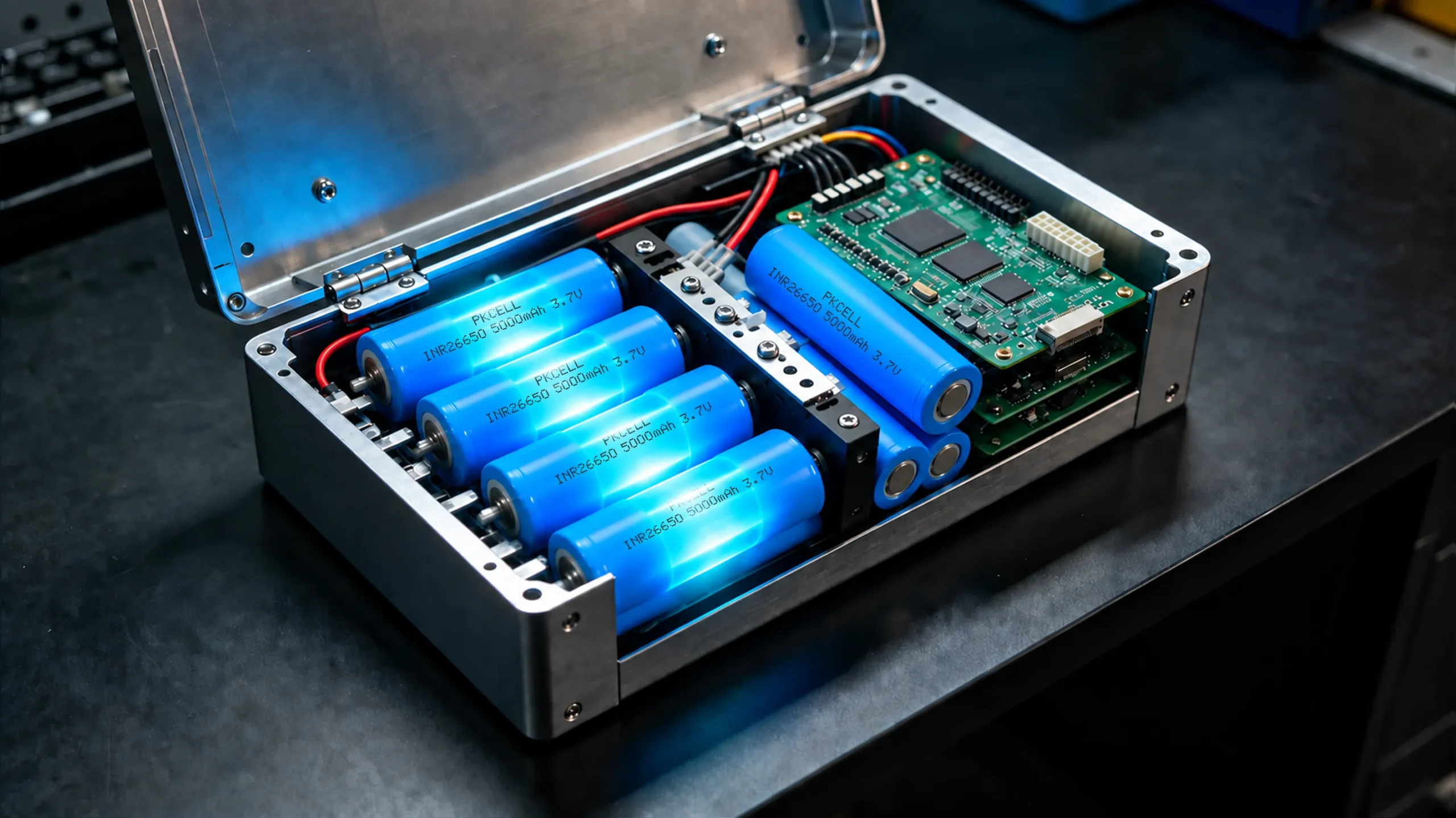
Custom 72V 40Ah battery pack with thermally conductive potting for urban e‑motorcycle
2. PKCELL’s 72V 40Ah Battery Solution
After evaluating capacity, vehicle power demand, available battery space and thermal requirements, PKCELL developed the following solution:
- Battery voltage: 72V nominal
- Battery capacity: 40Ah
- Nominal energy: approximately 2.88kWh
- Cell: Samsung 21700 5000mAh
- Configuration: 20S8P, total cells: 160
- Custom‑tooled battery enclosure
- Thermally conductive potting for heat management and structural reinforcement
The 20S configuration provides the required 72V‑class operating platform, while eight cells connected in parallel provide the required 40Ah capacity. The 8P architecture also delivers critical current‑sharing capability for high‑discharge scenarios.
3. Why the 8P Structure Matters for Discharge Performance
A motorcycle does not ask every cell to deliver the full vehicle current. In an 8P configuration, the pack current is distributed across eight parallel cells.
- 80A pack current → ~10A per cell
- 100A pack current → ~12.5A per cell
This current‑sharing architecture is one of the most important reasons a high‑capacity 21700 cell can be used successfully in a motorcycle battery. Overall pack current capability is determined not only by the cells, but also by parallel‑cell configuration, BMS current capability, busbar resistance, welding quality, wiring, temperature, SOC and thermal management. PKCELL treated the entire battery as a complete power‑delivery system, rather than simply assembling 160 cells together.
4. Maintaining Voltage Stability Under High Load
High discharge current creates voltage‑sag risk. Excessive internal resistance may cause weaker acceleration, reduced motor output, premature BMS undervoltage protection, higher heating and inconsistent riding performance.
PKCELL minimized resistance across the full current path by controlling cell consistency, parallel‑connection resistance, series interconnections, welding consistency, BMS current path, output wiring and power connectors. The goal was stable real‑world performance instead of only theoretical paper specifications.
5. Thermal Management Through Potting
High‑power discharge generates heat inside the compact battery housing. PKCELL adopted thermally conductive potting instead of relying only on internal air gaps.
- Better heat distribution, reducing localized hot‑spots
- Improved cell‑temperature consistency for balanced current‑sharing
- Enhanced mechanical stability against road vibration, shock and braking forces
- Extra protection against moisture, dust and contaminants
6. A Custom‑Tooled Battery Enclosure
The battery enclosure was custom‑tooled for this vehicle platform instead of using off‑the‑shelf cases. Design considerations included frame space, mounting structure, connector position, service access, internal cell layout, potting requirements and mechanical protection. The battery supports removable design, allowing users to charge off‑vehicle from standard wall outlets. Enclosure design directly affects mechanical fit, heat transfer, vibration resistance and long‑term reliability.
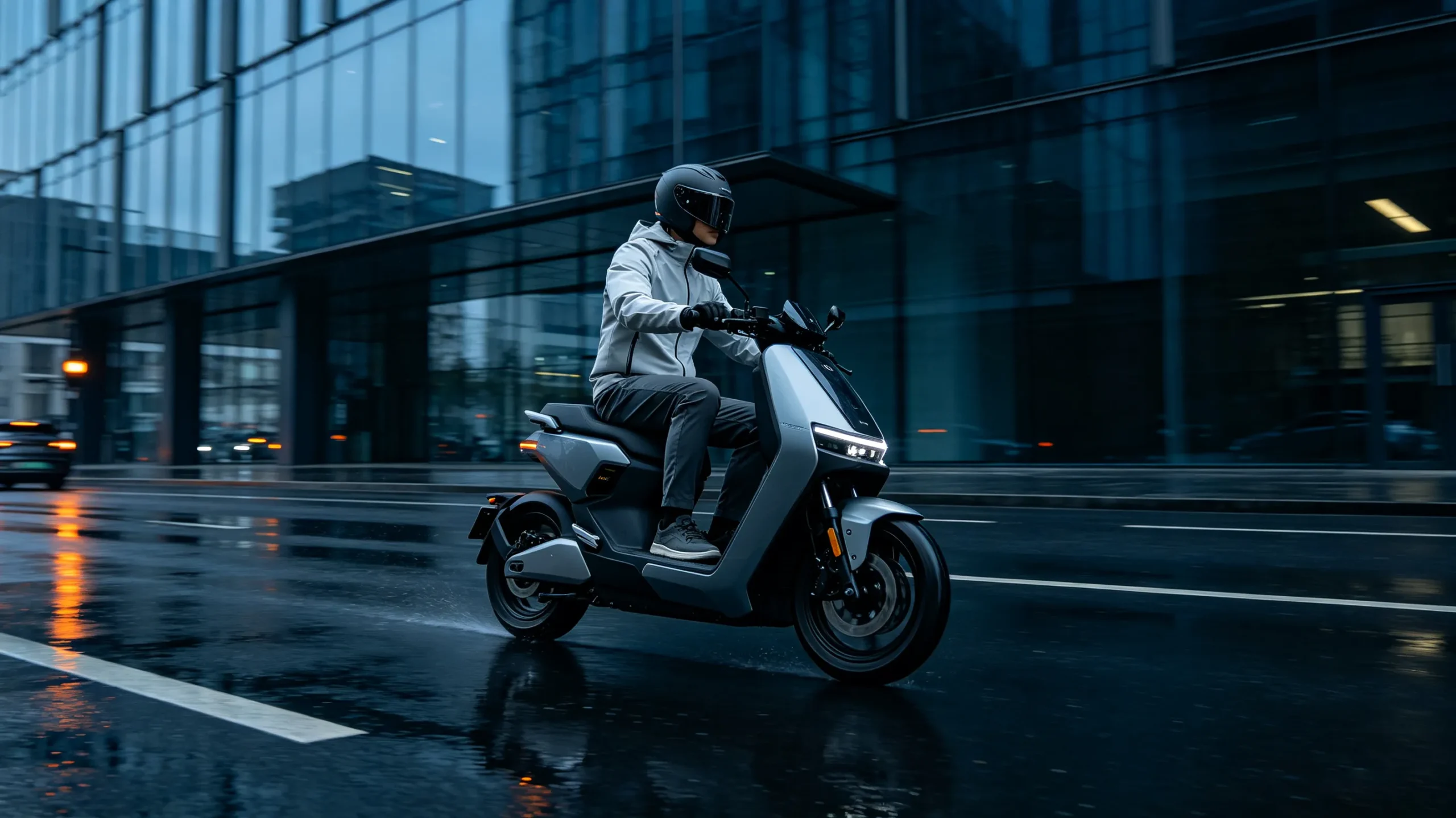
Urban riding requires repeated switching between cruising and high‑power acceleration
7. Balancing Range and Power
Pure ultra‑high‑power cells usually sacrifice energy density. Using Samsung 21700 5000mAh cells, PKCELL achieved ~2.88kWh nominal energy within the pack. This architecture strikes a key balance: sufficient energy for practical urban mileage plus strong discharge capability for motorcycle acceleration, perfectly matching city stop‑and‑go riding cycles.
8. What the Battery Must Handle in Real Riding
Real‑world urban riding creates dynamic load cycles: Start → rapid acceleration → cruise → regenerative braking → stop → accelerate again → climb hill → cruise. The battery must respond to fast current changes without severe voltage drop, BMS interruption, abnormal heating or unstable power output. The customer was not merely purchasing a 72V 40Ah battery, but a complete power source built for real e‑motorcycle road conditions.
9. Value Delivered by the PKCELL Solution
The final battery design combined Samsung 21700 5000mAh cells, 20S8P architecture (~2.88kWh), high pack‑level discharge capability, low‑resistance electrical design, thermally conductive potting and custom enclosure tooling.
- Strong acceleration: 8P parallel architecture distributes high motor current across cells
- Stable riding performance: minimized voltage sag under heavy load
- Better thermal control: potting eliminates local hot‑spots
- Higher mechanical reliability: anti‑vibration & shock‑resistant encapsulated structure
- Practical urban range: high‑energy‑density 21700 cell design
Conclusione
Electric motorcycle battery design is not simply a question of “How many volts and how many amp‑hours?” More critical factors are deliverable full‑pack current, voltage stability under acceleration, heat dissipation performance, and anti‑vibration mechanical robustness. This 72V 40Ah 20S8P pack uses Samsung 21700 5000mAh cells with custom enclosure and thermally conductive potting. Capacity defines riding range, while discharge capability directly determines throttle‑response riding experience for urban electric motorcycles.
If you are developing high‑performance electric two‑wheelers requiring removable battery packs, high peak‑current output and balanced energy density, PKCELL can deliver custom cell configuration, thermal potting design, custom enclosure development and full‑system validation services.
FAQ
Q1: What cell and configuration is adopted for this e‑motorcycle battery?
A1: Samsung 21700 5000mAh cells, 20S8P configuration, total 160 cells; nominal 72V 40Ah, ~2.88kWh energy.
Q2: What is the advantage of 8P parallel architecture?
A2: Realizes current‑sharing. Large total pack current is distributed over 8 parallel cells, lowering single‑cell current stress, improving discharge performance and service life.
Q3: What is thermally conductive potting used for?
A3: Optimizes heat distribution to avoid hot‑spots, improves cell temperature consistency, strengthens anti‑vibration mechanical performance and adds dust‑proof & moisture‑proof protection.
Q4: Why use custom‑tooled enclosure instead of standard cases?
A4: Perfectly matches vehicle frame installation space, potting layout, connector position and removable‑battery requirement; improves overall mechanical reliability.
Q5: What real‑world road conditions can this battery cope with?
A5: Repeated stop‑and‑go urban commuting, rapid acceleration, hill‑climbing, vibration from uneven pavement and regenerative‑braking dynamic‑load cycles.
Keywords & Tags
20S8P Lithium‑ion Pack
21700 High‑Discharge Battery
Thermally Conductive Potting
Removable E‑bike Battery Pack
Low‑Resistance Motorcycle Battery
Custom Tooled Battery Enclosure
Urban E‑Motorcycle Power Source