

Blog
Understanding the Difference Between 3.6V to 3.7V Batteries
10월 21, 2026
무료 상담 요청을 남겨주세요.

In the 2026 landscape of high-end consumer electronics and Industrial IoT (IIoT), Lithium Polymer (Li-Po) batteries remain the gold standard due to their energy density and form-factor flexibility. For engineers and procurement specialists, understanding the nuanced data behind the spec sheet is critical for device safety and longevity.
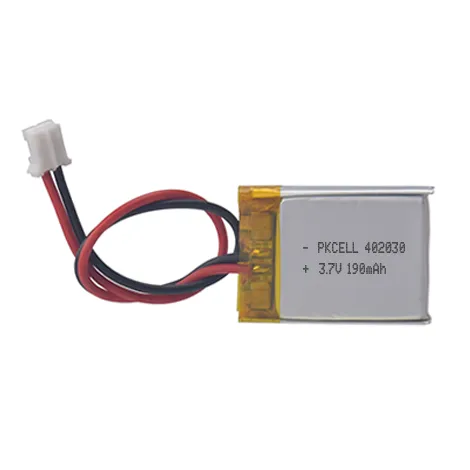
Based on the latest industry standards from PKCELL, this guide breaks down the essential parameters of 3.7V Li-Polymer cells.
Long-lasting power for high-drain devices like digital cameras and flashlights.
Reducing waste with 1000+ recharge cycles per battery unit.
Maintains up to 80% charge even after 12 months of non-use.
The following table summarizes the benchmark performance for a standard high-quality Li-Polymer cell as shown in the technical documentation:
| Item | Chemistry | Expert Notes |
|---|---|---|
| Nominal Voltage | 3.7V | The standard operating reference voltage. |
| Nominal Capacity | Rated at 0.2C (at 20°C) | Capacity varies based on discharge rate (C-rate). |
| Minimum Capacity | >= 95% of Nominal | 5% tolerance is the industry standard for QC. |
| Max Discharging Current | 1C | Exceeding 1C may cause rapid voltage drops. |
| Charge Cut-off Voltage | 4.2V | The absolute ceiling for safe charging. |
| Discharge Cut-off Voltage | 3.0V | The floor to prevent irreversible cell damage. |
| Cycle Life | 500 Times (75% DOD) | Retains 75% capacity after 500 cycles (Exceeds GB standards). |
One of the most misunderstood aspects of battery performance is the C-rate. As noted in the PKCELL specifications, the “Nominal Capacity” is not a fixed number; it is a variable of the discharge environment.
Testing a battery at 0.2C (discharging the full capacity over 5 hours) provides the most accurate “Rated Capacity.” If you charge or discharge at 0.5C, the measured capacity will decrease due to internal resistance and chemical polarization.
Warning: Charging currents should ideally stay below 0.5C. Forcing high currents into a standard Li-Po cell can lead to battery swelling (bloating) and a significant reduction in chemical stability.
In 2026, the industry benchmark for “quality” has moved beyond simply surviving 500 cycles. While the standard Chinese GB requirement is 60% capacity retention after 500 cycles, PKCELL Li-Polymer batteries are engineered to retain over 75%.
To achieve this level of longevity, users should adhere to the following:
Operating Temperature: Maintain usage between -20°C and 60°C.
Storage Temperature: For long-term health, store cells between -20°C and 45°C.
Voltage Discipline: Never allow the cell to drop below 3.0V. Deep discharge is the primary cause of premature cycle failure.
Li-Polymer technology is evolving to meet the demands of modern hardware:
Wearable Medical Tech: Ultra-thin Li-Po cells (down to 0.5mm) allow for flexible smart patches that monitor vitals 24/7.
Smart Logistics: With a working range down to -20°C, these batteries power trackers in cold-chain environments without losing connectivity.
High-Precision Robotics: Precise 1C discharge rates ensure stable power delivery for sensors and actuators in AI-driven automation.