

Blog
High-Performance Battery Solutions for Instrumentation, Measuring Equipment & Power Tools
9월 11, 2026
무료 상담 요청을 남겨주세요.

The first important distinction is primary vs. rechargeable battery chemistry.
Li-SOCl₂ batteries use lithium metal as the anode and thionyl chloride as the cathode material/electrolyte system. They are known for extremely low self-discharge and long operating life, making them suitable for smart meters, industrial sensors, remote monitoring devices, and other low-power applications.
Li-MnO₂ batteries use lithium metal and manganese dioxide chemistry. Common formats include cylindrical cells and coin cells such as CR2032 and CR123A. They provide stable voltage, good energy density, and reliable performance for consumer electronics, security devices, medical equipment, and industrial products.
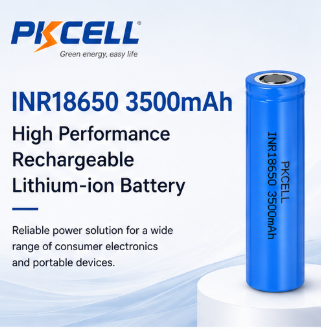
INR batteries are rechargeable lithium-ion cells generally using a nickel-manganese-cobalt-based cathode family. Depending on the formulation, INR cells can provide a useful balance between energy density, power capability, and cycle life.
ICR batteries traditionally refer to lithium-ion cells using a lithium cobalt oxide (LCO) cathode. They can provide high energy density but generally require careful protection and thermal management, particularly in high-power applications.
| Dimension | Li-SOCl₂ | Li-MnO₂ | INR 18650/21700 | ICR 18650/21700 |
|---|---|---|---|---|
| Battery type | Primary | Primary | Rechargeable | Rechargeable |
| Rechargeable | No | No | Yes | Yes |
| Typical nominal voltage | ~3.6 V | ~3.0 V | ~3.6–3.7 V | ~3.6–3.7 V |
| Self-discharge | Very low | Low | Higher than primary lithium | Higher than primary lithium |
| Cycle operation | Not applicable | Not applicable | Suitable | Suitable |
| Long-term storage | Excellent | Excellent | Moderate | Moderate |
| High-current capability | Chemistry-dependent | Chemistry-dependent | Generally strong | Generally moderate |
| Typical applications | Smart meters, sensors, IoT | Medical, security, electronics | Power tools, mobility, electronics | Energy-focused portable electronics |
| Best feature | Long service life | Stable energy supply | Power + rechargeability | High energy density |
Important: 18650 and 21700 describe the physical cell formats, not a single battery chemistry. An 18650 or 21700 cell can use different cathode chemistries and performance designs.
The most important question is not simply “Which battery has higher capacity?” It is:
Does the device need to be recharged, or does it need to operate reliably for years without maintenance?
For a remote smart meter, replacing or recharging the battery every few months is impractical. A primary lithium battery with very low self-discharge may therefore be a better solution.
For a power tool, electric mobility device, portable medical cart, or high-performance electronic device, the battery may be charged hundreds or thousands of times. In this situation, an INR lithium-ion battery pack is generally more appropriate.
Therefore, a higher-capacity rechargeable battery is not automatically a better replacement for a primary lithium battery.
Li-SOCl₂ is particularly attractive for low-current applications that need to remain operational for several years. Its very low self-discharge can help preserve stored energy during long periods of operation and storage.
Li-MnO₂ also offers high energy density for primary applications and is widely used where compact size and dependable energy delivery are important.
INR and ICR lithium-ion cells can offer high practical energy storage, but they are designed around rechargeable operation. Their performance depends heavily on charge/discharge conditions, protection circuitry, temperature, cycle depth, and storage conditions.
For equipment that spends most of its life in standby mode, the comparison should therefore consider usable energy over the entire service period, rather than only the initial cell capacity.
This is one of the biggest differences.
Li-SOCl₂ batteries are excellent for low and moderate continuous loads, but standard bobbin-type Li-SOCl₂ cells may have limited pulse capability. For devices with sudden high-current demands, a suitable pulse-support design may be required.
Li-MnO₂ cells generally provide better pulse performance than many Li-SOCl₂ designs and are widely used in applications requiring short bursts of current.
INR lithium-ion cells are available in high-rate and high-power versions. This makes them suitable for equipment requiring substantial continuous or peak current.
ICR cells are generally more focused on energy density rather than extreme high-current performance.
For example:
Not necessarily.
The 18650 format is approximately 18 mm in diameter and 65 mm long, while the 21700 format is approximately 21 mm in diameter and 70 mm long.
Because the 21700 format is physically larger, it can accommodate more active material and may offer higher capacity or power capability in an appropriate cell design.
| Parameter | 18650 | 21700 |
|---|---|---|
| Approx. diameter | 18 mm | 21 mm |
| Approx. length | 65 mm | 70 mm |
| Typical capacity range | Application-dependent | Application-dependent |
| Energy potential | High | Generally higher |
| Pack volume efficiency | Good | Often better for high-capacity designs |
| Availability | Very mature | Increasingly common |
| Typical applications | Electronics, tools, battery packs | EVs, tools, robotics, high-energy packs |
However, cell chemistry, electrode design, internal resistance, discharge rate, and manufacturing quality can be more important than cell size alone.
A high-quality 18650 may outperform a poorly designed 21700 cell in a specific application.
A practical selection process should start with five parameters.
If the battery must be repeatedly charged, select a rechargeable lithium-ion chemistry such as INR.
If the battery will be installed and replaced only after several years, consider Li-SOCl₂ or Li-MnO₂.
Measure both:
A battery that can provide sufficient capacity may still fail if its internal resistance is too high for the required pulse load.
For a remote IoT sensor operating for 5–10 years, primary lithium chemistry can be highly attractive.
For a device operating several hours every day and requiring regular charging, rechargeable 18650 or 21700 cells are usually more appropriate.
Temperature can significantly affect battery performance.
Industrial applications may require:
The battery should therefore be selected according to the actual operating temperature range, not simply the nominal specification.
For rechargeable applications, 18650 and 21700 cells can be assembled into configurations such as:
1S, 2S, 3S, 4S, 7S, 10S, 13S, 14S, etc.
A battery pack manufacturer can combine cells in series and parallel to achieve the required:
Best suited to low-power, long-life applications, including:
Best suited to compact primary lithium applications, including:
Best suited to rechargeable and high-power applications, including:
ICR-type cells may be considered where energy density and rechargeable operation are important and the required current is compatible with the selected cell.
For demanding high-power applications, however, engineers should evaluate modern high-rate lithium-ion chemistries rather than selecting an ICR cell based only on the 18650/21700 format.
Not directly in most applications. Li-SOCl₂ is a primary lithium chemistry with different voltage characteristics, discharge behavior, charging limitations, and application requirements. The device must be designed for the selected chemistry.
Standard Li-MnO₂ primary batteries should not be recharged. Attempting to recharge a non-rechargeable lithium battery can create safety risks. If rechargeable operation is required, use an appropriate rechargeable lithium-ion chemistry and charging system.
Not automatically. A 21700 cell is physically larger and can provide higher capacity or power in many designs, but actual performance depends on chemistry, cell construction, capacity, internal resistance, discharge rate, and manufacturer specifications.
Li-SOCl₂ is often an excellent choice for smart-meter applications because smart meters can require very long service life and very low standby self-discharge. The final design should also consider communication-module pulse currents and temperature conditions.
High-rate rechargeable lithium-ion cells, commonly INR-type cells, are generally more suitable for power tools because they support repeated charging and high current demand.
Li-SOCl₂ primary batteries are generally among the strongest choices for very long shelf-life and low-self-discharge applications, although the exact shelf life depends on cell construction, storage temperature, sealing, and manufacturer specifications.
Potentially, but not as a simple universal replacement. The new cell must meet the equipment’s voltage, capacity, current, dimensions, charging requirements, protection system, and thermal requirements.
The simplest way to choose is:
| Your requirement | Recommended direction |
|---|---|
| 5–10+ year low-power operation | Li-SOCl₂ |
| Compact primary lithium power | Li-MnO₂ |
| Rechargeable operation | INR / other suitable Li-ion |
| High continuous current | High-rate INR |
| Higher-capacity cylindrical pack | 21700 |
| Compact cylindrical pack | 18650 |
| Remote IoT / smart meter | Li-SOCl₂ |
| Medical/security primary device | Li-MnO₂ |
| Power tools / robotics | INR 18650/21700 |
| Customized industrial battery pack | Select chemistry based on load + temperature + cycle requirements |
Li-SOCl₂, Li-MnO₂, INR, and ICR batteries are designed for fundamentally different operating requirements. Li-SOCl₂ and Li-MnO₂ are primary lithium technologies that excel in long-life, low-maintenance applications, while INR and ICR 18650/21700 cells are rechargeable lithium-ion solutions designed for repeated cycling.
The correct battery should therefore be selected according to rechargeability, current demand, operating life, temperature, capacity, dimensions, safety requirements, and application environment rather than simply comparing nominal capacity.
For industrial equipment requiring a customized battery solution, the cell chemistry, series/parallel configuration, BMS, protection circuit, connectors, enclosure, and charging system should be evaluated together.
PKCELL provides primary lithium cells and rechargeable lithium-ion battery solutions for industrial, IoT, medical, monitoring, portable equipment, and customized battery-pack applications. For a specific project, providing the required voltage, capacity, continuous/peak current, dimensions, operating temperature, and expected working time is the best starting point for battery selection.
Li-SOCl2 battery · Li-MnO2 battery · lithium thionyl chloride battery · lithium manganese dioxide battery · INR 18650 battery · ICR 18650 battery · INR 21700 battery · ICR 21700 battery · 18650 vs 21700 · primary lithium battery vs rechargeable lithium battery · industrial lithium battery · custom lithium battery pack · high-rate 18650 battery · high-capacity 21700 battery