
Emergency Communication Equipment Battery Solution
Emergency Communication Equipment Battery Solution
Reliable, Long-Lasting Power Support for Critical Missions
Introduction: Why Emergency Communication Equipment Demands a Better Battery System
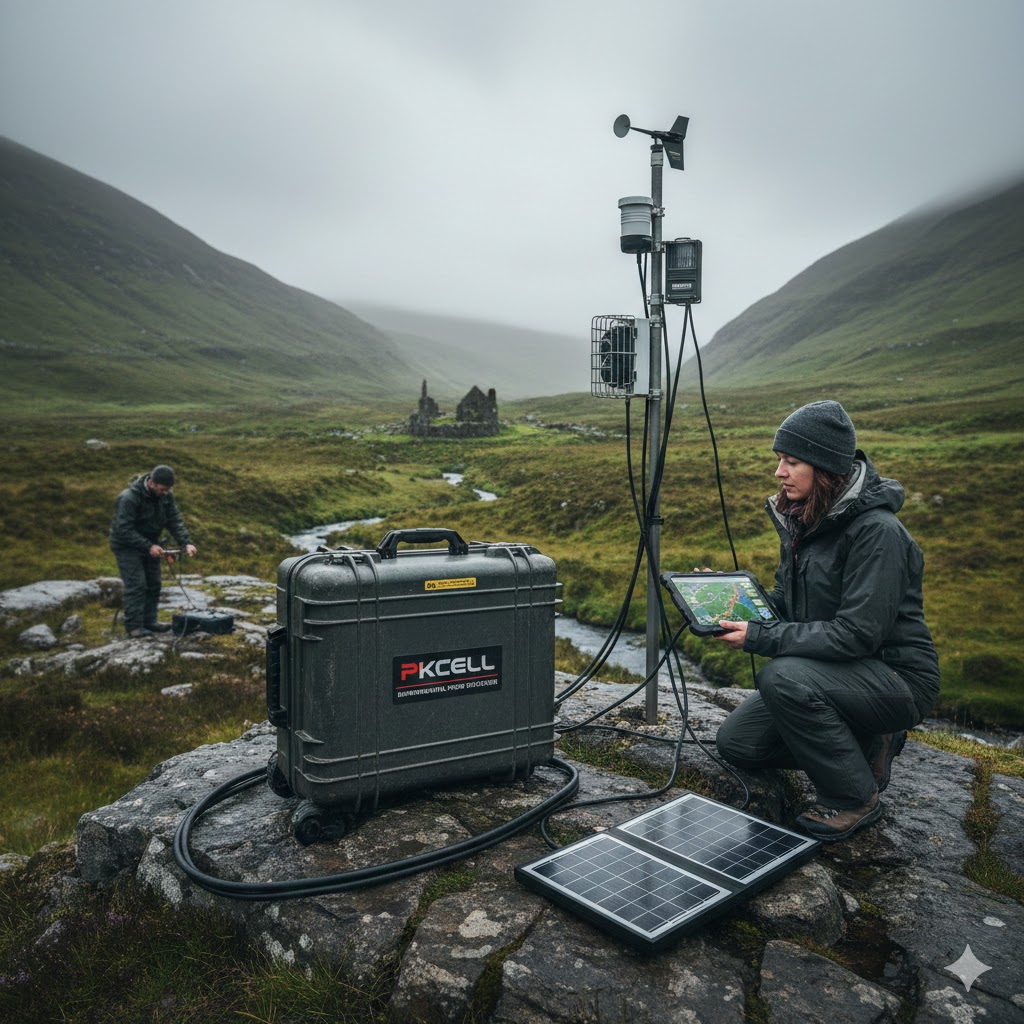
In natural disasters, emergency rescue operations, public-safety incidents, remote-area support, and temporary communication deployments, emergency communication equipment plays a critical role in maintaining command, coordination, and field connectivity. Whether the system is a portable relay, emergency communication case, field terminal, mobile command unit, or temporary communication node, unstable power or insufficient runtime can directly affect response efficiency and mission reliability.
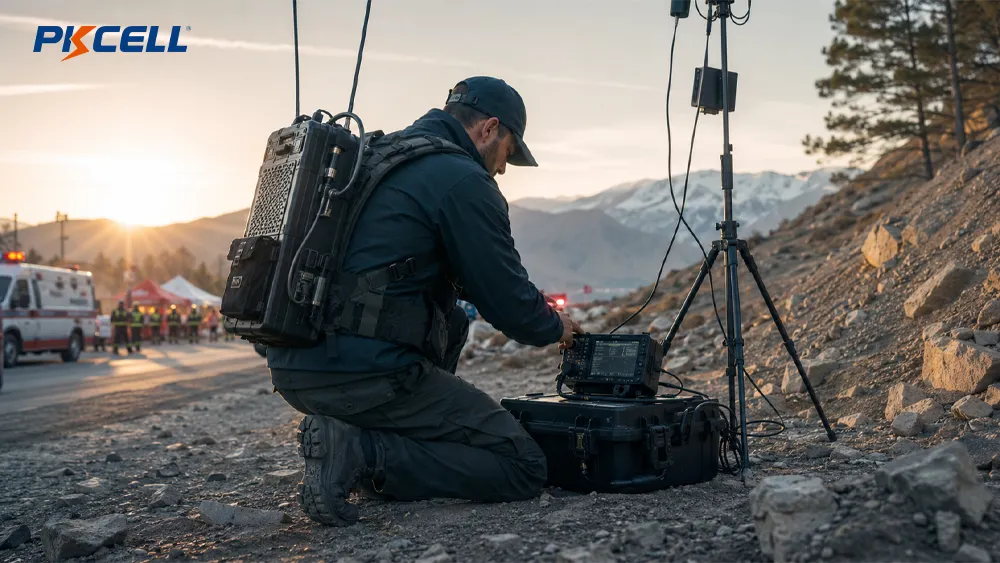
Backpack-style and portable emergency communication devices are especially demanding. They often need to be deployed rapidly, carried by a single operator, and used in rain, dust, cold weather, vibration, and off-grid environments. In these scenarios, the battery is not just a power source. It is a key part of the equipment’s reliability, portability, environmental adaptability, and serviceability.
PKCELL provides custom lithium battery solutions for emergency communication applications, covering battery-cell selection, PACK structure, BMS integration, communication protocol customization, and temperature-performance design. According to the company profile, PKCELL offers one-stop customization from requirement analysis to mass production, with configurable voltage range, capacity, form factor, BMS integration, and temperature adaptation for demanding environments.
1. What Should Be Considered When Choosing a Battery for Emergency Communication Equipment?
1.1 Stable Continuous Output
Emergency communication equipment may include transmit modules, receive modules, displays, controllers, and auxiliary peripherals. If the battery cannot maintain stable output, the system may experience communication interruption, abnormal signal behavior, or restart events during operation.
For this reason, the battery system should be designed around the actual load profile, operating duration, and power demand of the equipment. PKCELL’s customization model explicitly includes solution design, PACK integration, and BMS system development, allowing the battery to be tailored to the device rather than forcing the device to adapt to a generic pack.
1.2 Sufficient Runtime
In many emergency scenarios, external power is unavailable or delayed. The equipment must therefore rely on internal battery power for several hours or longer. Runtime becomes even more critical for backpack-style or portable relay systems, where the battery must balance energy, size, and weight.
For portable emergency communication projects, a 14.8V platform with a medium-capacity pack is often a practical design direction when portability and field runtime both matter. In PKCELL’s case, the exact battery voltage, capacity, and structure should still be defined project by project according to equipment power, runtime target, and space constraints, because PKCELL’s standard capability is built around custom voltage, capacity, and form-factor design rather than a one-size-fits-all catalog pack.
1.3 Environmental Adaptability
Emergency communication systems may be used in rain, humidity, dust, cold-weather environments, or extreme outdoor conditions. The battery therefore needs not only electrical reliability, but also strong environmental adaptability.
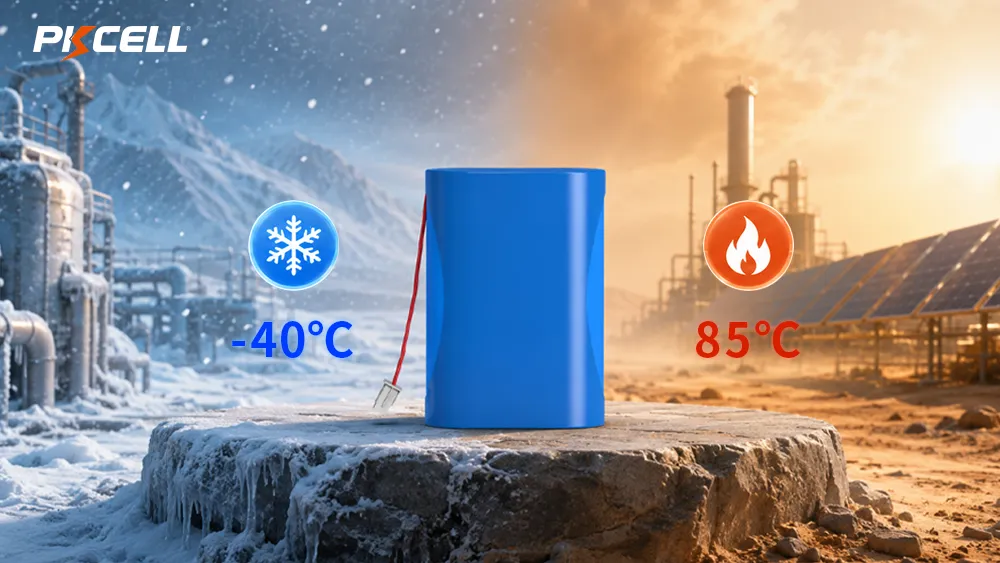
PKCELL’s materials state that temperature performance can be customized for extreme conditions, and the March 2026 traceability report confirms that the company can provide a -40°C to 85°C wide-temperature customized battery pack as an upgrade route for extreme-environment applications.
1.4 Portability and Fast Deployment
Portable and backpack communication devices must be easy to transport, install, and replace in the field. Battery weight, structure, handle design, and installation method all affect deployment efficiency.
PKCELL’s customization scope includes form-factor adaptation to equipment space constraints, which is especially important for compact relay systems, communication cases, and field-deployable electronics.
1.5 Battery Visibility and Status Management
In emergency missions, knowing how much power remains is essential. Clear capacity visibility helps field personnel estimate remaining operating time, plan power replacement, and reduce the risk of mission interruption.
PKCELL’s BMS capability includes real-time monitoring of voltage, temperature, and capacity, enabling battery systems to support more intelligent and visible power management.
1.6 Communication and Fault Diagnosis
Modern emergency communication systems increasingly require the battery to work as part of the broader equipment-management architecture. A battery with communication capability can report status, alarms, and operating data to the host system.
PKCELL’s technical materials explicitly list CAN and RS485 protocol customization, along with software integration and data logging for diagnostics. These features are highly relevant for emergency communication equipment that needs remote monitoring, system-level visibility, and easier fault analysis.
1.7 Service Life and Cell Consistency
Emergency communication equipment is often kept on standby for long periods and then expected to work immediately when needed. This makes long-term consistency and pack stability especially important.
A battery system with proper BMS logic and cell balancing helps reduce cell deviation over time, improves long-term pack consistency, and supports better service life for equipment that cycles between storage, readiness, and field deployment.
2. PKCELL Battery Solution Directions for Emergency Communication Equipment
2.1 Backpack / Portable Relay Systems
For backpack-style or portable emergency communication relay equipment, PKCELL can support a battery-pack solution focused on:
- compact structure for easier carrying and deployment
- stable discharge for multi-hour field missions
- optional RS485 / CAN communication for system integration
- BMS protection with real-time monitoring
- customizable temperature performance for outdoor environments
Because PKCELL’s customization capability covers voltage, capacity, structure, BMS integration, and thermal adaptation, these types of packs can be designed specifically for portable communication tasks rather than adapted from a generic consumer battery.
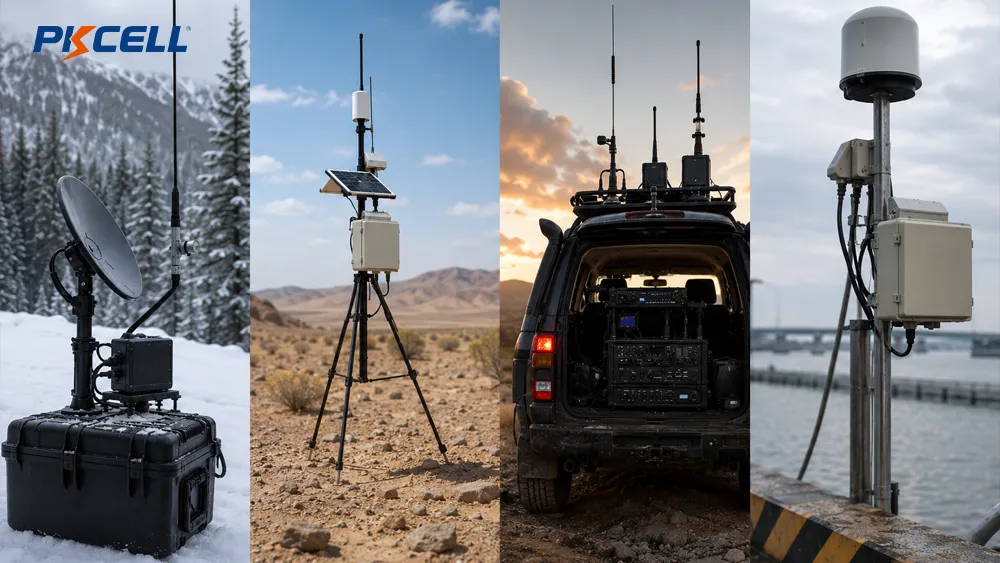
2.2 Communication Cases, Mobile Support Boxes, and Vehicle-Based Units
For larger emergency communication systems such as communication boxes, mobile command subsystems, relay support cases, or vehicle-mounted equipment, the battery solution can be scaled toward:
- higher voltage platforms such as 24V, 25.2V, or 48V
- larger capacity for longer autonomous operating time
- RS485 / CAN communication for host-system integration
- BMS-based monitoring, diagnostics, and data logging
- enhanced structural design for installation, maintenance, and environmental protection
These solution directions align well with PKCELL’s stated one-stop customization process and its support for full PACK development from concept to mass production.
2.3 Low-Temperature and Wide-Temperature Versions
For cold-region projects or outdoor emergency deployments, low-temperature battery behavior is often a decisive engineering factor. PKCELL’s March 2026 traceability report shows that, under 80% charge, -20°C, and 0.5C (1500mA) continuous discharge, the validated pack maintained load voltage above 3.0V under a 5.99W equipment load, meeting normal usage requirements at that condition. The same report states that no abnormal BMS protection was triggered during the -20°C verification.
The same document also shows the boundary behavior at more extreme temperatures: -25°C was near-limit, while -30°C was beyond sustained operating capability for the tested configuration. As an improvement route, PKCELL formally recommends a -40°C to 85°C wide-temperature customized battery pack, and notes that subsequent orders had already been moved to wide-temperature cells in that case.
3. What Practical Value Can a PKCELL Emergency Communication Battery Solution Deliver?
3.1 Keeps Communication Running in Critical Moments
In emergency operations, communication continuity directly affects command and execution. A properly designed lithium battery system helps communication equipment maintain stable power during critical missions.
3.2 Improves Autonomous Operating Capability
High-energy-density lithium systems allow communication equipment to operate for longer periods when grid power is unavailable, making them better suited to field deployment, disaster zones, and temporary communication restoration tasks.
3.3 Improves Reliability in Harsh Outdoor Environments
With temperature-performance customization and wide-temperature upgrade capability, PKCELL solutions are better positioned for outdoor, cold-weather, and high-variability environments. PKCELL’s internal report explicitly documents the engineering route toward cold-weather and wide-temperature pack development.
3.4 Improves Field Deployment Efficiency
A battery pack designed around portable use, structure fit, and fast replacement can reduce operator burden and help teams deploy or restore communication systems more quickly.
3.5 Enables Smarter Battery Management
With real-time monitoring, CAN / RS485 communication, and data logging, battery status can be integrated into the overall device-management workflow, improving visibility for maintenance teams and system operators.
3.6 Supports Longer Service Life
A battery system with proper BMS protection and cell-balancing logic can reduce long-term degradation caused by inconsistency, which is particularly important for equipment that may spend extended periods in standby before sudden deployment.
4. Why a PKCELL Lithium Battery Solution Is Better Than a Traditional Power Option
4.1 Higher Energy Density
Compared with traditional battery systems, lithium batteries provide more energy within the same weight and space envelope, making them more suitable for portable or mobile emergency communication equipment.
4.2 Better Customization Fit
PKCELL does not position itself only as a standard battery supplier. The company profile emphasizes full-process customization in voltage, capacity, dimensions, BMS, and temperature performance, which is especially valuable for specialized communication hardware.
4.3 Better Intelligence and Diagnostics
Modern emergency communication systems increasingly require the battery to do more than discharge power. PKCELL’s support for protocol customization, software integration, real-time monitoring, and data logging makes the pack a more intelligent subsystem.
4.4 Better Environmental Adaptability
PKCELL’s internal testing and upgrade path around low-temperature behavior and -40°C to 85°C wide-temperature packs give it a stronger engineering basis for outdoor and cold-weather projects than a generic standard battery option.
5. Technical Directions Worth Highlighting in Emergency Communication Battery Projects
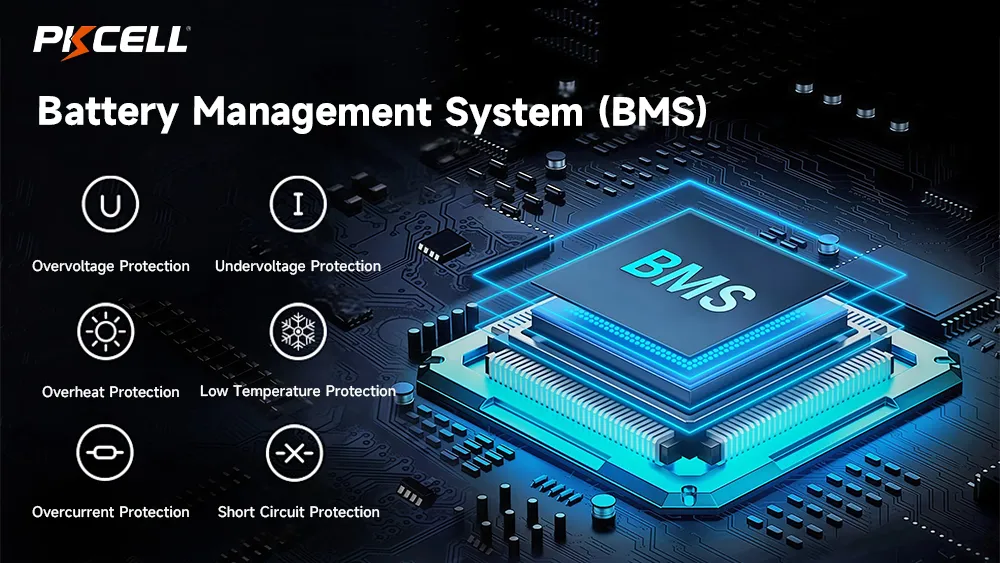
- 5.1 Intelligent BMS Protection: PKCELL lists multiple protection mechanisms in its technical materials, including overcharge protection, over-discharge protection, overcurrent protection, short-circuit protection, and temperature protection. These are essential for mission-critical communication systems.
- 5.2 Real-Time Battery Monitoring: Voltage, temperature, and capacity monitoring make the battery system more transparent and easier to manage during operations.
- 5.3 Protocol Customization: PKCELL supports CAN and RS485, allowing the battery pack to communicate with device systems and control platforms.
- 5.4 Low-Temperature Optimization: The March 2026 traceability report provides a strong internal engineering reference for low-temperature behavior, showing validated operation at -20°C under defined conditions and a clear wide-temperature upgrade route for more extreme environments.
- 5.5 Quality Assurance and Certification Support: PKCELL states that it performs 100% cell testing and supports CE, UN38.3, RoHS, and MSDS, which is highly relevant for export projects and professional equipment programs.
6. How to Choose the Right PKCELL Battery Solution for Different Emergency Communication Devices
Backpack / Portable Communication Relays
Prioritize:
- lightweight and compact structure
- stable output for several-hour missions
- optional RS485 / CAN integration
- clear battery-status visibility
- low-temperature or wide-temperature options for outdoor use
Portable Communication Cases
Prioritize:
- higher energy reserve
- easy installation and replacement
- good structural fit
- battery monitoring and system diagnostics
Vehicle-Mounted Emergency Communication Systems
Prioritize:
- stronger structural design
- vibration resistance
- wider temperature adaptability
- communication interface compatibility
- more robust system-level monitoring
Temporary Outdoor Communication Nodes
Prioritize:
- environmental resilience
- long autonomous runtime
- wide-temperature battery options
- reliable low-temperature behavior for cold-region deployment
7. Maintenance Recommendations to Extend Battery Life
- inspect battery status and remaining capacity regularly
- store backup units at appropriate charge level
- avoid long-term exposure to extreme heat or moisture
- use matched charging solutions
- for cold-region projects, choose low-temperature-optimized or wide-temperature versions rather than relying on a standard room-temperature pack
PKCELL’s own improvement recommendations in the March 2026 traceability report include low-temperature verification enhancement, batch traceability archives, field temperature recording, and wide-temperature product upgrades for cold-weather applications.
常見問題
Q1: Can PKCELL develop custom battery packs specifically for emergency communication equipment?
A1: Yes. PKCELL’s documented capability includes custom voltage, capacity, form factor, BMS integration, and temperature-performance design, supported by a one-stop process from requirement analysis to mass production.
Q2: Does PKCELL support RS485 or CAN communication?
A2: Yes. PKCELL explicitly lists CAN and RS485 protocol customization, along with software integration and data logging.
Q3: Can PKCELL support low-temperature or wide-temperature battery solutions?
A3: Yes. PKCELL documents temperature-performance customization in its company profile and states in its March 2026 traceability report that it can provide a -40°C to 85°C wide-temperature customized battery pack for extreme environments.
Q4: Does PKCELL have internal validation data for low-temperature discharge?
A4: Yes. The March 2026 traceability report records a verification condition of 80% charge, -20°C, 0.5C continuous discharge, with load voltage above 3.0V under a 5.99W equipment load, and notes that no abnormal BMS trigger occurred in that validation.
Q5: What quality and certification support can PKCELL provide?
A5: PKCELL states that it performs 100% cell testing and supports CE, UN38.3, RoHS, and MSDS, along with ISO 9001 and ISO 14001 quality-system credentials.
總結
For emergency communication equipment manufacturers, system integrators, and project buyers, the battery is not only a power source. It is a core element of runtime, deployment efficiency, environmental adaptability, maintainability, and mission PKCELL can provide emergency communication battery solutions centered on custom voltage and capacity design, form-factor adaptation, BMS protection, RS485 / CAN communication, real-time monitoring, data logging, and low-temperature / wide-temperature optimization. For portable and backpack systems, the design focus is usually portability, stable multi-hour runtime, and environmental resilience. For larger communication cases, mobile support systems, and vehicle-mounted units, the solution can scale toward higher voltage, higher capacity, and deeper system integration.