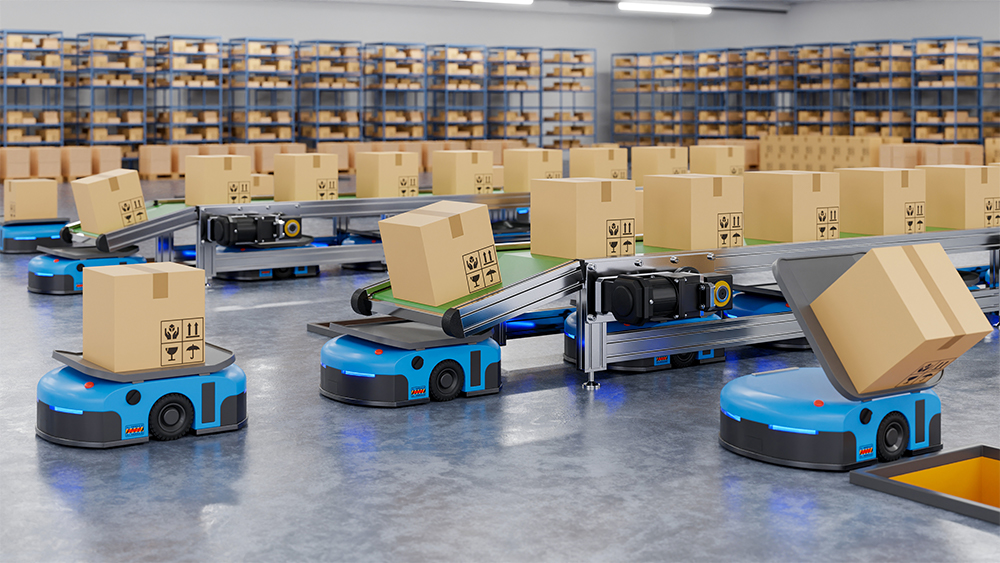
Automated Guided Vehicles (AGVs) serve as core mobile equipment for modern smart manufacturing plants and intelligent logistics warehouses. The overall operational efficiency, continuous working time, service life and operational safety of AGVs are all closely tied to their built-in battery systems. Picking a matched power battery is therefore a key step to maximize the value of AGV equipment. This guide sorts out the mainstream battery solutions for AGVs, analyzes core selection criteria, and puts forward targeted recommendations for AGVs with different load grades, helping industrial users make scientific and rational battery decisions according to actual operating scenarios.
1. Overview & Performance Analysis of Mainstream AGV Batteries
At present, three types of batteries are widely adopted in the AGV industry: lead-acid batteries, lithium iron phosphate batteries and ternary lithium batteries (lithium-trihydride). Each category has distinct differences in energy density, charge-discharge performance, service life, cost and environmental adaptability, which are elaborated below respectively.
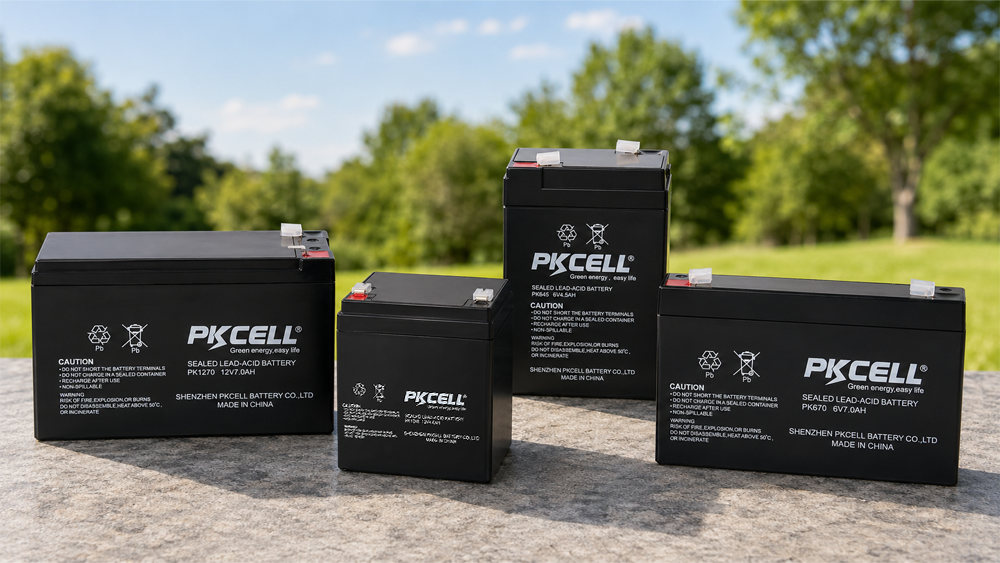
1.1 Lead-Acid Batteries
Lead-acid batteries are a traditional power solution with mature manufacturing techniques and abundant raw material reserves. Their most prominent advantage lies in low upfront procurement cost, so they are still chosen by some projects with tight budget constraints.
In terms of core performance, the energy density of lead-acid products stays between 30 Wh/kg and 50 Wh/kg, which is relatively low. To meet the power demand of AGVs, such batteries require larger overall size and heavier weight, adding extra dead load to the vehicle and indirectly restricting driving efficiency and cruising range. When it comes to charging and discharging, a full charge takes 6 to 8 hours or longer, failing to support rapid power replenishment. Meanwhile, manufacturers suggest limiting the discharge depth to around 70%; deep discharge will cause irreversible damage to the battery. Besides, its self-discharge rate is high, and power loss is obvious during long-term standby.
The cycle life of lead-acid batteries is only 300 to 500 times. After repeated charging and discharging, the capacity will decline rapidly, leading to frequent replacement and increased later maintenance workload. From an environmental perspective, this kind of battery contains lead, a heavy metal. Improper disposal in production, usage or scrapping stages will bring hidden dangers to the ecological environment.
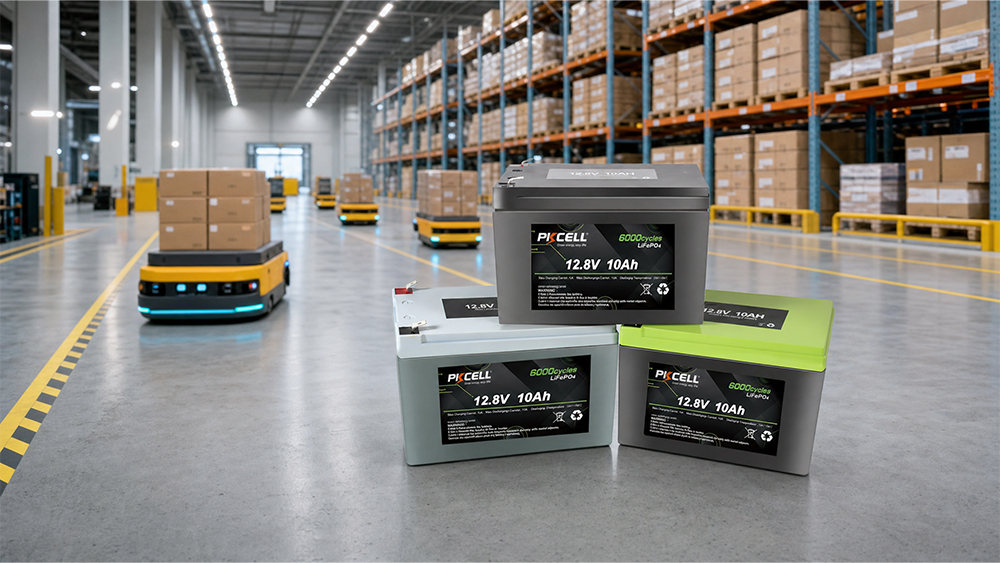
1.2 Lithium Iron Phosphate Batteries
As the mainstream power choice for modern industrial AGVs, lithium iron phosphate batteries stand out with comprehensive performance. Their energy density ranges from 100 Wh/kg to 150 Wh/kg. Under the same power output standard, they are lighter and more compact than lead-acid batteries, effectively optimizing AGV load distribution and boosting endurance and operating flexibility.
This battery type boasts excellent charge-discharge properties: it only takes 1 to 2 hours to complete full charging, well adapting to the “opportunity charging” mode of AGVs working in shifts. The allowable discharge depth exceeds 90%, making full use of stored electric energy. The self-discharge phenomenon is not obvious, so the power can be maintained stably during long-term parking. In terms of service life, its cycle life reaches 2,000 to 3,000 times, far exceeding lead-acid batteries, which greatly cuts down the frequency of replacement in the whole service cycle.
Although the initial purchase expense of lithium iron phosphate batteries is higher, their low maintenance demand and long service life make the total lifecycle cost more competitive. In addition, the material contains no toxic heavy metals, featuring eco-friendly properties and excellent thermal stability, so it can operate safely in complex industrial environments.
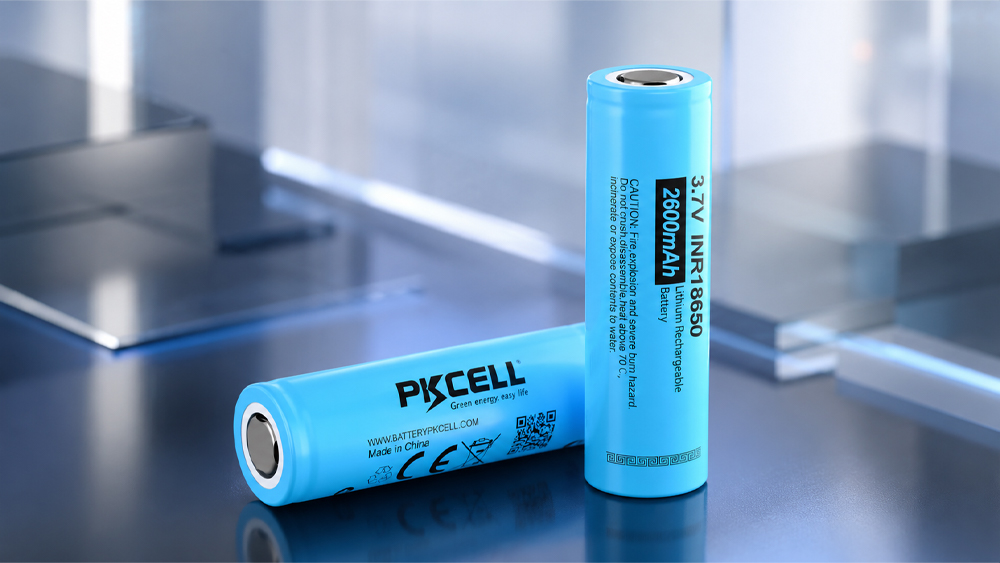
1.3 Ternary Lithium Batteries
Ternary lithium batteries take the lead among all AGV batteries in energy density, which translates into larger capacity under the same volume and weight. They also deliver outstanding performance in low-temperature environments and can work stably in cold spaces such as cold storage warehouses.
However, this product has noticeable drawbacks. Its thermal stability is weaker than lithium iron phosphate batteries, and it is more likely to trigger thermal runaway risks when encountering overheating, collision or abnormal current, putting forward higher requirements for the battery management system (BMS) and thermal protection structure of AGVs. Its cycle life is generally 800 to 2,000 times, shorter than lithium iron phosphate products. Meanwhile, the market price is relatively high.
Due to the above characteristics, ternary lithium batteries are only applied in a small number of special scenarios where vehicle weight, installation space and low-temperature performance are top priorities, rather than universal solutions for AGVs.
Supplementary Special Battery Type
Lithium tetrafluorophosphate batteries are also mentioned in the industry. They feature ultra-long cycle life, ultra-fast charging speed and ultra-wide temperature adaptability, but their energy density is extremely low and the cost is prohibitive. Currently, they are only used in a few niche AGV application fields.
2. Core Considerations for AGV Battery Selection
Before determining the battery type and specification, users need to combine the actual operating conditions of AGVs and focus on three major dimensions: working rhythm & cruising demand, load & operating speed, and full-lifecycle cost.
2.1 Working Rhythm & Cruising Range Demand
First, clarify the daily working hours and operation mode of AGVs. For 24-hour uninterrupted operating scenarios such as large-scale logistics warehouses and automated production workshops, the batteries must have long cycle life and large allowable discharge depth to cope with high-intensity continuous work. In this case, lithium iron phosphate batteries are the most appropriate option.
To match the cruising requirement, it is necessary to calculate the required battery capacity by combining the AGV’s driving route, average speed and actual load. Users can obtain operational data through field tests or simulation runs, and then select batteries with matched energy density and discharge performance to ensure the vehicles have sufficient power to complete all scheduled tasks.
2.2 Load & Operating Speed Requirements
When AGVs are responsible for transporting heavy goods, the instantaneous power output of the battery will rise sharply. At this time, it is essential to select batteries with high-rate discharge capability. Lithium iron phosphate batteries can release large current instantly to meet the power demand during startup and acceleration of heavy-load AGVs. Long-term high-load operation will test the stability and durability of batteries, so products with mature performance must be selected to avoid frequent failures.
For AGVs running at high speed, batteries need to combine high energy density and rapid response capability to guarantee both cruising mileage and stable power output. Lithium batteries perform well in this regard. Moreover, high-speed operation will generate vibration and impact, so the shock resistance and overall protection level of the battery pack also need to be taken into account.
2.3 Full-Lifecycle Cost Control
Cost assessment cannot merely focus on the one-time procurement price. The comprehensive cost composed of later maintenance, replacement and downtime loss is the core reference for long-term operation.
Lead-acid batteries have the lowest initial cost, but they require regular inspection of liquid level, distilled water supplementation and balanced charging, with heavy maintenance work. Coupled with short cycle life, the cumulative expenditure in the later stage is high. Lithium batteries have a higher entry cost, but they basically need no daily maintenance, only regular status inspection. Their long service life effectively reduces replacement times and overall operating costs throughout the cycle. Users need to balance budget and long-term benefits according to project operation years.
3. Targeted Battery Recommendations for AGVs of Different Load Grades
Combining load capacity, application industries and operating characteristics, AGVs are divided into light-duty, medium-duty and heavy-duty types. The corresponding battery matching schemes are as follows.
3.1 Light-Duty AGVs (Load Capacity Below 500 kg)
Light-duty AGVs are widely used in electronics manufacturing, pharmaceutical production, food processing and other industries, mainly undertaking workshop material distribution and short-distance material handling. Such vehicles feature flexible movement, complex driving paths and frequent start-stop actions.
It is recommended to prioritize lithium batteries for light-duty models. Their light weight can reduce the dead load of AGVs and improve driving flexibility. The fast charging function shortens the waiting time for power replenishment, and the long cycle life adapts to high-frequency use. For working areas with dense personnel and strict environmental safety standards, lithium iron phosphate batteries with superior stability are the optimal choice.
3.2 Medium-Duty AGVs (Load Capacity 500 kg – 2000 kg)
Medium-duty AGVs are mainstream equipment in automobile manufacturing and large logistics warehousing, tasked with transporting medium-weight goods. They put forward high requirements for battery endurance, load resistance and operational stability.
Lithium batteries are still the preferred solution for this type of AGV. If the working site has high ambient temperature or strict safety management norms, lithium iron phosphate batteries are more suitable. Relying on good high-temperature resistance and stable discharge performance, they can maintain reliable operation under long-term medium-load conditions.
3.3 Heavy-Duty AGVs (Load Capacity Above 2000 kg)
Heavy-duty AGVs operate in harsh environments such as steel plants, ports and mines, responsible for handling ultra-heavy cargo. The equipment has extremely high standards for battery power, load resistance and durability.
Lithium iron phosphate batteries are the ideal match for heavy-duty AGVs. Their strong high-rate discharge capability can support the great current demand during startup and heavy cargo handling. Excellent stability and long cycle life reduce the maintenance and replacement costs caused by harsh working conditions. Meanwhile, in view of the large power consumption of heavy-duty vehicles, it is advisable to select high-capacity battery packs and optimise the heat dissipation and protection design of the battery system to ensure operational safety.
4. Summary
The selection of AGV supporting batteries is a systematic work that requires comprehensive consideration of operating mode, load parameters, service environment, safety standards and full-lifecycle cost. No single battery product can adapt to all AGV application scenarios.
Lead-acid batteries are limited to cost-sensitive projects with low working intensity due to their shortcomings in performance and maintenance. Lithium iron phosphate batteries, with balanced performance, high safety and low long-term cost, have become the universal preferred solution for most industrial AGVs. Ternary lithium batteries are only suitable for special scenarios with extreme requirements on volume, weight and low-temperature performance.
In actual selection, enterprises need to start from their own operational demands, conduct a comprehensive comparison of various battery indicators, and select the most appropriate battery type and specification, so as to ensure that AGVs maintain efficient, stable and safe operation for a long time.
For enterprises seeking high-performance and highly reliable AGV power solutions, lithium iron phosphate batteries deliver outstanding energy density, fast charging speed, long service life and excellent thermal stability, providing solid power support for the stable operation of AGV fleets.