

When sourcing custom lithium battery packs, OEM engineers and product managers often face a crucial decision: Should the battery pack be fully UL 2054 certified, or is using UL 1642 recognized cells sufficient? While full system certification seems ideal, the vast majority of commercial and industrial battery packs opt for UL 1642 cells without pursuing UL 2054 pack certification.
1. Understanding the Core Standards: UL 1642 vs. UL 2054
To understand why this choice is so common, we must first distinguish the scope of these two Underwriters Laboratories (UL) standards:
- UL 1642 (Standard for Lithium Batteries): Applies specifically to bare lithium cells (e.g., 18650, 21700, or prismatic pouch cells). It evaluates the inherent stability of the cell under extreme conditions such as short circuits, crushing, overcharging, and thermal exposure.
- UL 2054 (Standard for Household and Commercial Batteries): Applies to the entire assembled battery pack, including the Battery Management System (BMS), enclosure, wiring, and secondary protective circuits. It requires rigorous fault-testing where individual protective components are artificially failed.
| Feature / Metric | UL 1642 Certification | UL 2054 Certification |
|---|---|---|
| Target Level | Individual Cell Level | Assembled Pack Level |
| Testing Focus | Cell chemistry & mechanical safety | BMS failure, enclosure, electrical protection |
| Testing Cost | Absorbed by cell manufacturer | $10,000 – $30,000+ USD |
| Time to Market | Immediate (Pre-certified cells) | Adds 8 – 16 Weeks |
| Market Requirement | Universal Industry Standard | Selected Consumer & Medical Markets |
2. Key Reasons Why UL 1642 Cells Are Preferred for Custom Packs
A. Cost and Development Efficiency
Obtaining UL 2054 certification requires destructive testing of dozens of completed battery packs, leading to high testing fees and sample destruction costs. For custom OEM applications with low-to-medium production volumes, investing tens of thousands of dollars in UL 2054 certification is often economically unfeasible.
B. Fast-Track Compliance via End-Device Standards (UL 62368-1)
In modern electronics, regulatory compliance focuses heavily on the overall device. Standard UL 62368-1 (Audio/video, information, and communication technology equipment) accepts custom battery packs built with UL 1642 recognized cells, provided the pack includes standard BMS protections and passes basic construction evaluations during the final product approval.
C. Design Flexibility and Iteration
UL 2054 certification ties the design strictly to the tested configuration. Any modification to the BMS, enclosure, or connector layout may invalidate the certification, requiring costly recertification. Using UL 1642 certified cells allows engineering teams the agility to update pack designs as product requirements evolve.
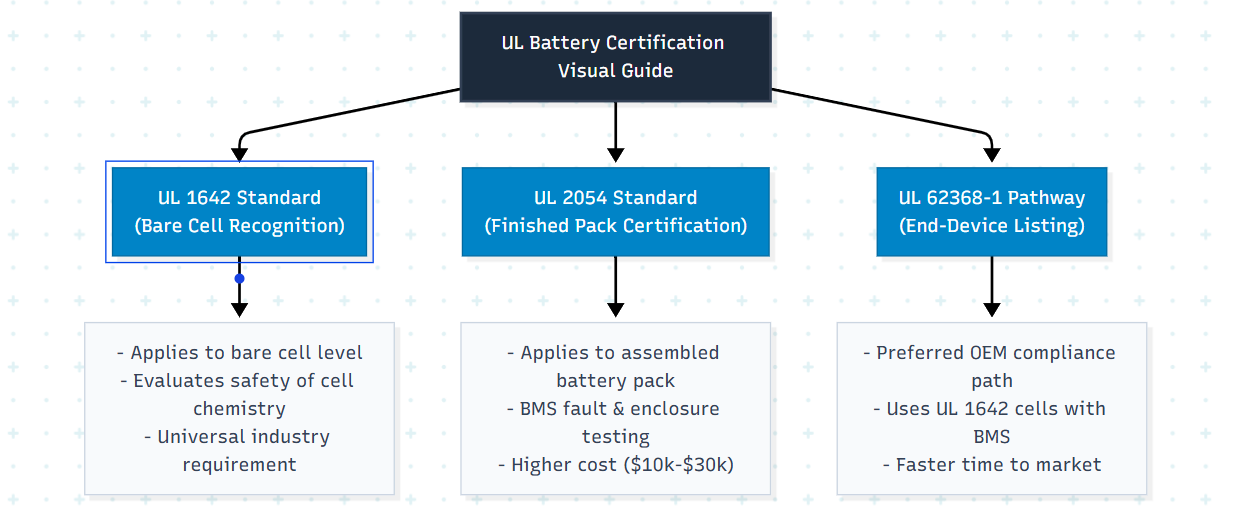 Figure 1: UL Battery Certification Visual Guide.
Comparison between UL 1642 (Bare Cell Level) and UL 2054 (Finished Battery Pack Certification), along with the industry-preferred compliance pathways for UL 62368-1 end-device listing.
3. When IS UL 2054 Certification Mandated?
While UL 1642 is sufficient for most applications, UL 2054 remains mandatory in specific scenarios:
- Direct retail consumer battery packs sold independently in North America.
- Certain specialized medical devices subject to strict FDA or UL 60601-1 requirements.
- Specific enterprise or municipal procurement contracts explicitly demanding UL 2054 listing.
Conclusion: Balancing Safety, Time, and Budget
For most OEM/ODM custom battery applications, choosing pre-certified UL 1642 cells combined with a robustly engineered BMS offers the ideal balance of safety, rapid market access, and cost-effectiveness. Unless end-market regulations specifically mandate UL 2054, leveraging UL 1642 cells streamlines certification under device-level standards like UL 62368-1.