

Blog
Understanding the Difference Between 3.6V to 3.7V Batteries
10 月 21, 2026
留下免費諮詢的請求

Medical carts—whether used for EHR workstations, medication dispensing, or mobile diagnostic devices—rely heavily on stable 24V 30Ah–60Ah battery systems. Choosing between lithium and lead-acid batteries directly affects uptime, nurse workflow, maintenance cost, and overall hospital efficiency. This article compares both chemistries across five critical dimensions to help hospitals make the right long-term decision.
Medical carts are pushed dozens of times per day, and battery weight directly impacts mobility and nurse ergonomics.
High-Energy Li-ion Batteries (e.g., NMC)
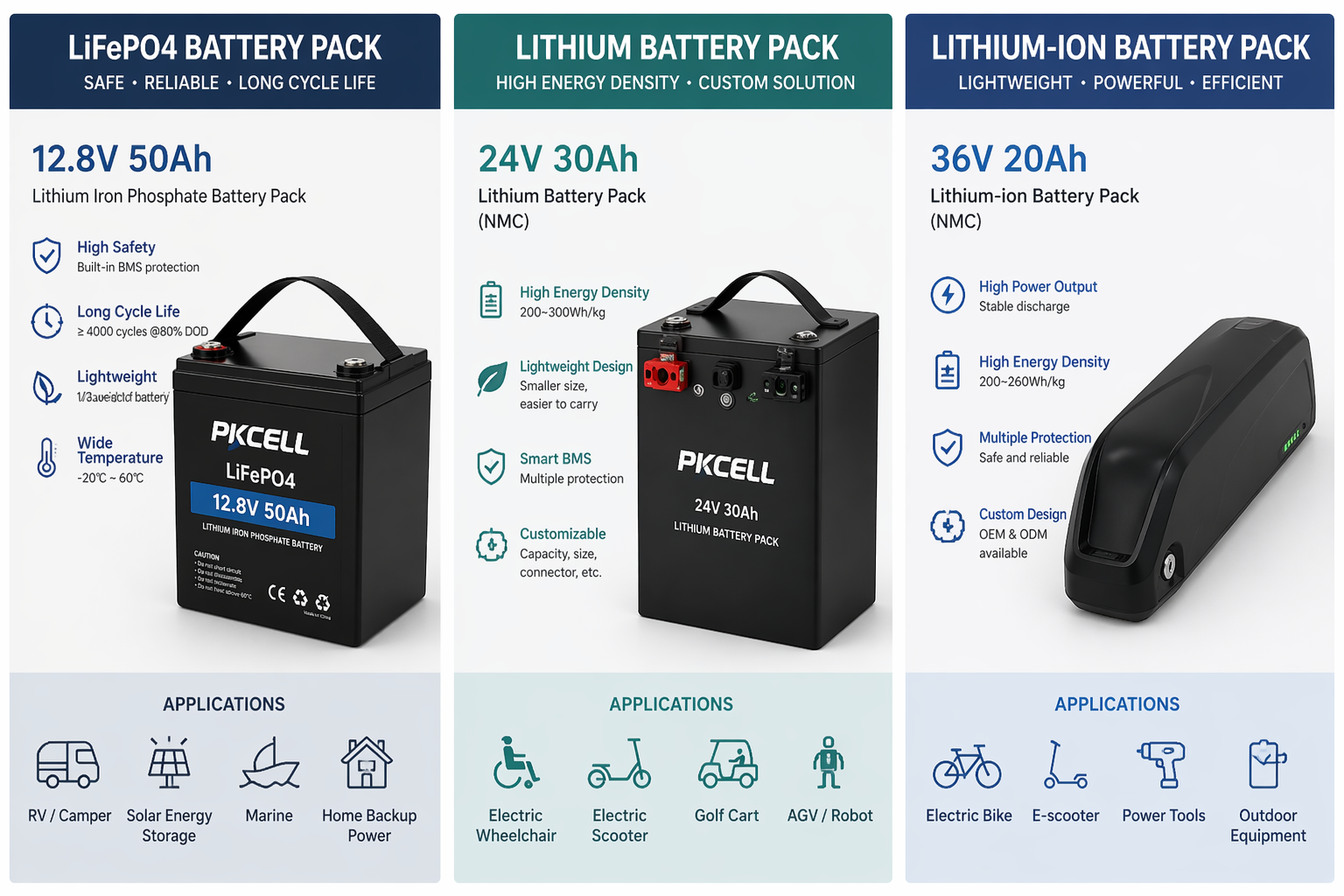
Clinical impact: Lighter lithium batteries make carts easier to maneuver in tight hospital corridors, reduce physical strain on nurses, and improve overall workflow efficiency.
Medical carts often undergo multiple charge cycles per day, making cycle life a key factor.
| Battery Type | Typical Cycle Life | Performance Notes |
|---|---|---|
| Li-ion | 1,000–1,500 cycles | Stable voltage output |
| LiFePO₄ | 2,000–3,000 cycles | Best thermal stability |
| Lead-acid | 300–500 cycles | Rapid degradation under deep discharge |
Lead-acid batteries suffer from sulfation and voltage drop as they discharge, while lithium batteries maintain stable output and support deeper discharge (80–90% DoD).
Conclusion: Lithium batteries deliver 2–4× longer service life, reducing replacement frequency and downtime.
Across all five dimensions—weight, lifespan, charging efficiency, TCO, and safety—lithium batteries outperform lead-acid by a wide margin. For hospitals seeking higher uptime, reduced maintenance, and improved nurse workflow, lithium (especially LiFePO₄) is the clear long-term solution.
Hospitals operate 24/7, so charging speed directly affects cart availability.
Clinical impact: Lithium batteries minimize downtime, ensuring medical carts remain available during peak hours, night shifts, and emergency operations.
Although lead-acid batteries have a lower upfront cost, lithium batteries offer a significantly lower 5-year TCO.
Example for a 24V 40Ah medical cart battery:
Conclusion: Lithium batteries deliver the best long-term economic value, especially for hospitals with large fleets of medical carts.
Hospitals require strict compliance with medical safety standards such as UL 60601-1. Lithium batteries—particularly LiFePO₄—offer enhanced safety features.
Conclusion: Lithium batteries provide safer, cleaner, and more reliable power for medical environments.
| Feature | Lithium Battery (Li-ion / LiFePO4) | Lead-Acid Battery (SLA / AGM) |
|---|---|---|
| Weight | 5–9 kg (Lightweight, easy to maneuver) | 18–25 kg (Heavy, harder to push) |
| Cycle Life | 1,500–3,000 cycles | 300–500 cycles |
| Charging Time | 1.5–3 hours | 6–8 hours |
| Usable Capacity | 80–90% DoD | 50% DoD |
| Maintenance | Maintenance-free | Regular checks required |
| Safety | BMS protection, no leakage, high thermal stability | Risk of gas release and acid leakage |
| Total Cost of Ownership | Low (long lifespan, fewer replacements) | High (frequent replacements) |
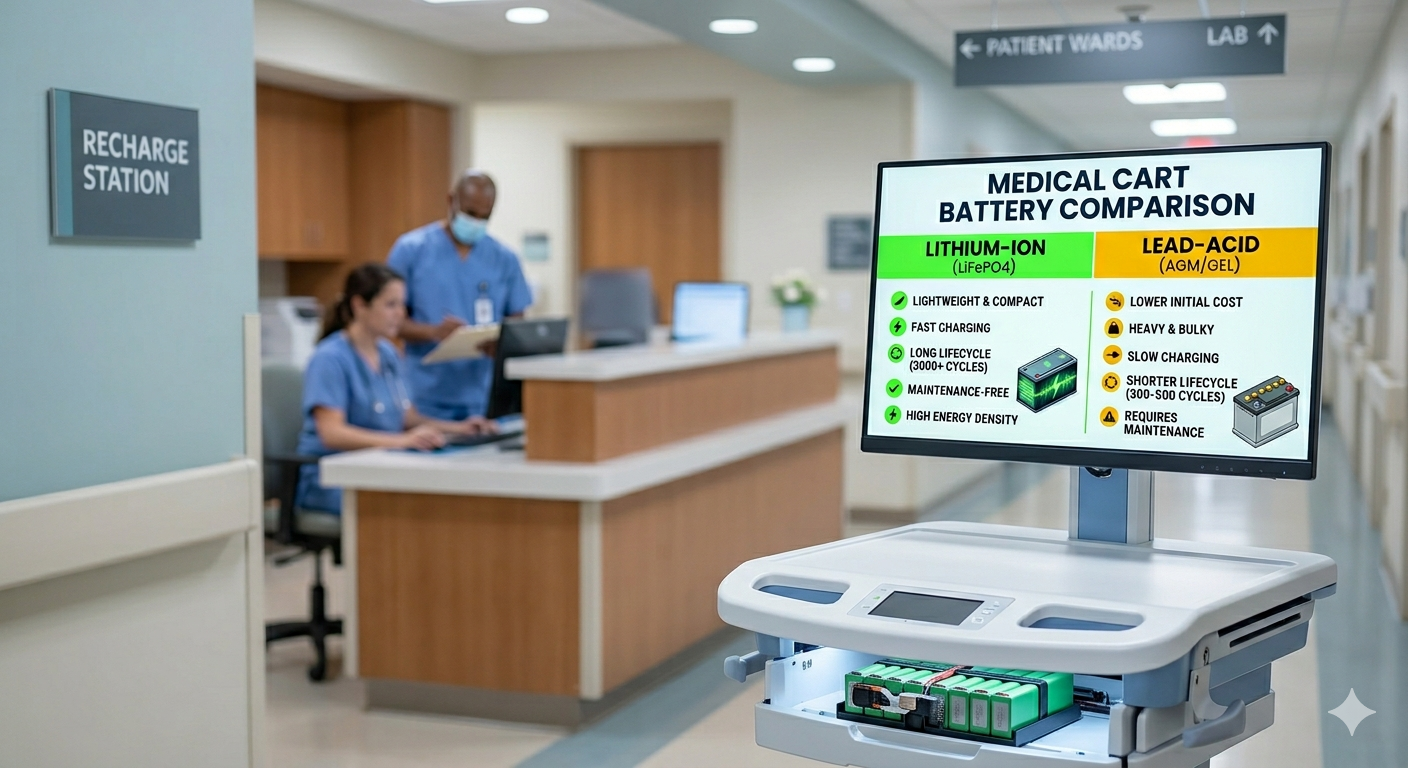
Across all five dimensions—weight, lifespan, charging efficiency, TCO, and safety—lithium batteries outperform lead-acid by a wide margin. For hospitals seeking higher uptime, reduced maintenance, and improved nurse workflow, lithium (especially LiFePO₄) is the clear long-term solution.
The shift is driven by efficiency and long-term value. While lead-acid batteries have a lower upfront cost, Lithium Iron Phosphate (LiFePO4) batteries offer a cycle life 5–10 times longer, faster charging, and a much lighter weight.
Ultimately, this results in a significantly lower Total Cost of Ownership (TCO) for healthcare facilities.
Yes. Medical-grade lithium batteries primarily use LiFePO4 chemistry, which is renowned for its high thermal stability. They are equipped with an integrated Battery Management System (BMS) that protects against:
Lithium batteries can be fully charged within 2–3 hours and support “opportunity charging” (short bursts of charging) without any memory effect. In comparison, lead-acid batteries typically require 8–10 hours for a full restoration of capacity.